## Introduction
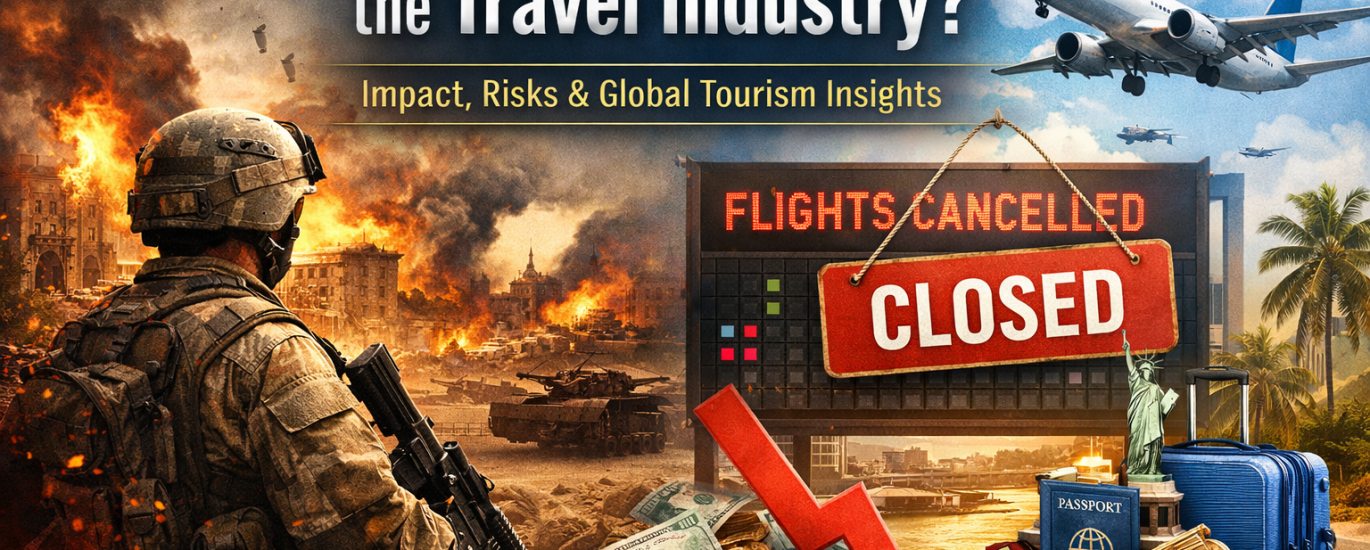
The travel and tourism industry is one of the most dynamic sectors in the global economy, contributing significantly to GDP, employment, and cultural exchange. However, it is also one of the most sensitive industries when it comes to geopolitical instability. Among all disruptive factors, war stands out as one of the most devastating influences on travel.
From sudden flight cancellations to long-term declines in tourism, war reshapes travel patterns, disrupts economies, and changes how people perceive safety. In this blog, we will explore how war affects the travel industry, its short-term and long-term impacts, and how the industry adapts to such crises.
—
## 1. Immediate Impact of War on Travel
### 1.1 Flight Disruptions and Airspace Closures
One of the first effects of war is the closure of airspace in affected regions. Airlines are forced to reroute or cancel flights due to safety concerns. This leads to:
– Increased flight times and fuel costs
– Higher ticket prices
– Massive inconvenience for travelers
For example, when conflicts arise, major airlines often suspend operations to affected countries, causing a ripple effect across global aviation networks.
### 1.2 Travel Advisories and Restrictions
Governments issue travel warnings or bans during wartime. These advisories discourage or even prohibit citizens from traveling to certain regions.
– Tourism drops instantly
– Travel agencies face cancellations
– Insurance companies may refuse coverage
Such restrictions not only affect the war zone but also neighboring countries.
—
## 2. Decline in Tourism Demand
### 2.1 Fear and Safety Concerns
Tourists prioritize safety above everything. Even if a conflict is localized, the perception of danger spreads globally.
– Tourists avoid entire regions
– Bookings drop drastically
– Popular destinations become deserted
Fear can linger long after the war ends, delaying recovery.
### 2.2 Impact on International Travelers
International tourism is highly sensitive to global news. War creates uncertainty, leading to:
– Reduced long-haul travel
– Preference for domestic tourism
– Shift toward “safe” destinations
Countries perceived as stable often see a temporary increase in tourism as travelers redirect their plans.
—
## 3. Economic Consequences for the Travel Industry
### 3.1 Loss of Revenue
War severely impacts revenue streams across the travel sector:
– Airlines suffer from route cancellations
– Hotels face low occupancy rates
– Tour operators lose bookings
This results in billions of dollars in losses globally.
### 3.2 Job Losses and Business Closures
The travel industry employs millions of people worldwide. During war:
– Employees are laid off
– Small businesses shut down
– Local economies collapse
Destinations heavily dependent on tourism are hit the hardest.
—
## 4. Impact on Hospitality and Local Businesses
### 4.1 Hotels and Accommodation
Hotels in conflict zones experience:
– Mass cancellations
– Reduced international guests
– Financial instability
Luxury hotels, in particular, face significant losses due to their reliance on foreign tourists.
### 4.2 Restaurants and Local Vendors
Tourism-driven businesses such as restaurants, souvenir shops, and local markets also suffer.
– Reduced footfall
– Lower sales
– Economic hardship for local communities
War disrupts the entire ecosystem connected to tourism.
—
## 5. Infrastructure Damage
### 5.1 Destruction of Tourist Attractions
War can physically damage historical sites, monuments, and natural attractions.
– Cultural heritage is lost
– Tourism appeal declines
– Restoration takes years
This has long-term consequences for a destination’s identity.
### 5.2 Transportation Infrastructure
Roads, airports, and railways are often damaged during conflicts.
– Accessibility becomes difficult
– Travel logistics are disrupted
– Recovery requires heavy investment
Without proper infrastructure, tourism cannot function effectively.
—
## 6. Long-Term Effects on Travel Behavior
### 6.1 Change in Tourist Preferences
War influences how people choose travel destinations:
– Preference for politically stable countries
– Increased demand for travel insurance
– Growth in “safe tourism” markets
Travelers become more cautious and research-driven.
### 6.2 Rise of Domestic Tourism
When international travel declines, domestic tourism often increases.
– People explore local destinations
– Governments promote internal tourism
– Local economies receive some relief
This shift can partially offset losses from international tourism.
—
## 7. Impact on Airlines and Aviation Industry
### 7.1 Increased Operational Costs
Airlines face higher costs due to:
– Longer flight routes
– Increased fuel consumption
– Additional security measures
These costs are often passed on to passengers.
### 7.2 Reduced Passenger Demand
War leads to fewer travelers, resulting in:
– Lower ticket sales
– Reduced flight frequency
– Financial losses for airlines
Some airlines may even face bankruptcy in extreme cases.
—
## 8. Travel Insurance and Risk Management
### 8.1 Increased Demand for Insurance
During uncertain times, travelers seek protection:
– Demand for comprehensive travel insurance rises
– Policies become more expensive
– Coverage limitations increase
Insurance companies adjust their policies based on risk levels.
### 8.2 Industry Adaptation
Travel companies adopt risk management strategies:
– Flexible booking policies
– Refund and cancellation options
– Real-time updates for travelers
These measures help maintain customer trust.
—
## 9. Role of Media and Perception
### 9.1 Media Influence
Media coverage plays a crucial role in shaping public perception.
– Continuous news updates increase fear
– Even safe areas may be perceived as dangerous
– Tourism declines due to negative image
Perception often matters more than reality.
### 9.2 Social Media Impact
Social media amplifies the effects:
– Viral content spreads panic
– Travelers share negative experiences
– Destinations suffer reputational damage
Managing online narratives becomes essential.
—
## 10. Recovery of the Travel Industry After War
### 10.1 Gradual Return of Tourists
Recovery is slow and depends on:
– Political stability
– Infrastructure rebuilding
– Government initiatives
Tourists return gradually as confidence improves.
### 10.2 Marketing and Rebranding
Countries invest in rebuilding their image:
– Tourism campaigns
– Discounts and offers
– International partnerships
Rebranding helps attract visitors back.
### 10.3 Role of Government Support
Governments play a key role in recovery:
– Financial aid for businesses
– Infrastructure development
– Safety assurance measures
Strong policies accelerate industry revival.
—
## 11. Case Studies and Real-World Examples
Throughout history, wars have significantly impacted tourism:
– Regions affected by conflict often see immediate tourism collapse
– Neighboring countries also experience declines
– Recovery can take years or even decades
However, some destinations have successfully rebuilt their tourism industries through strategic planning and global cooperation.
—
## 12. Opportunities Amid Crisis
Interestingly, war can also create unexpected opportunities:
– Growth in alternative destinations
– Rise of remote and digital tourism planning
– Innovation in travel safety measures
Travel companies that adapt quickly can survive and even thrive.
—
## Conclusion
War has a profound and far-reaching impact on the travel industry. From immediate disruptions like flight cancellations and travel bans to long-term effects on tourism demand and infrastructure, the consequences are severe.
The industry’s sensitivity to safety, perception, and global stability makes it particularly vulnerable. However, it is also highly resilient. With proper planning, innovation, and government support, the travel industry can recover and adapt to changing circumstances.
In today’s interconnected world, understanding the relationship between war and travel is crucial for businesses, policymakers, and travelers alike. While war disrupts, the human desire to explore and connect ensures that travel will always find a way to bounce back.